Uncontrolled spread of invasive plants
Tree of Heaven, kudzu, Japanese knotweed, English ivy, and Norway maple crowd out native vegetation and weaken habitat quality.
We want to restore the Lower Palisades as a connected urban natural area.
The Palisades were nearly destroyed by quarrying in the late 1800s. A grassroots campaign led by the New Jersey State Federation of Women's Clubs helped create the Palisades Interstate Park Commission in 1900.
Land acquisition and long-term stewardship protected the cliffs in Bergen and Rockland Counties. South of that managed parkland, the Lower Palisades remain divided among municipal and private lots without comparable environmental management.
Existing tools such as Jersey City's Palisades Preservation Overlay District provide a foundation, but protecting views and development patterns is not the same as managing an urban cliff ecosystem.
Tree of Heaven, kudzu, Japanese knotweed, English ivy, and Norway maple crowd out native vegetation and weaken habitat quality.
Vegetation is often topped only when it obstructs roadways or skyline views, rather than managed according to urban restoration practices.
Steep terrain, dumping, and encampments create cleanup challenges in areas that are difficult to reach safely.
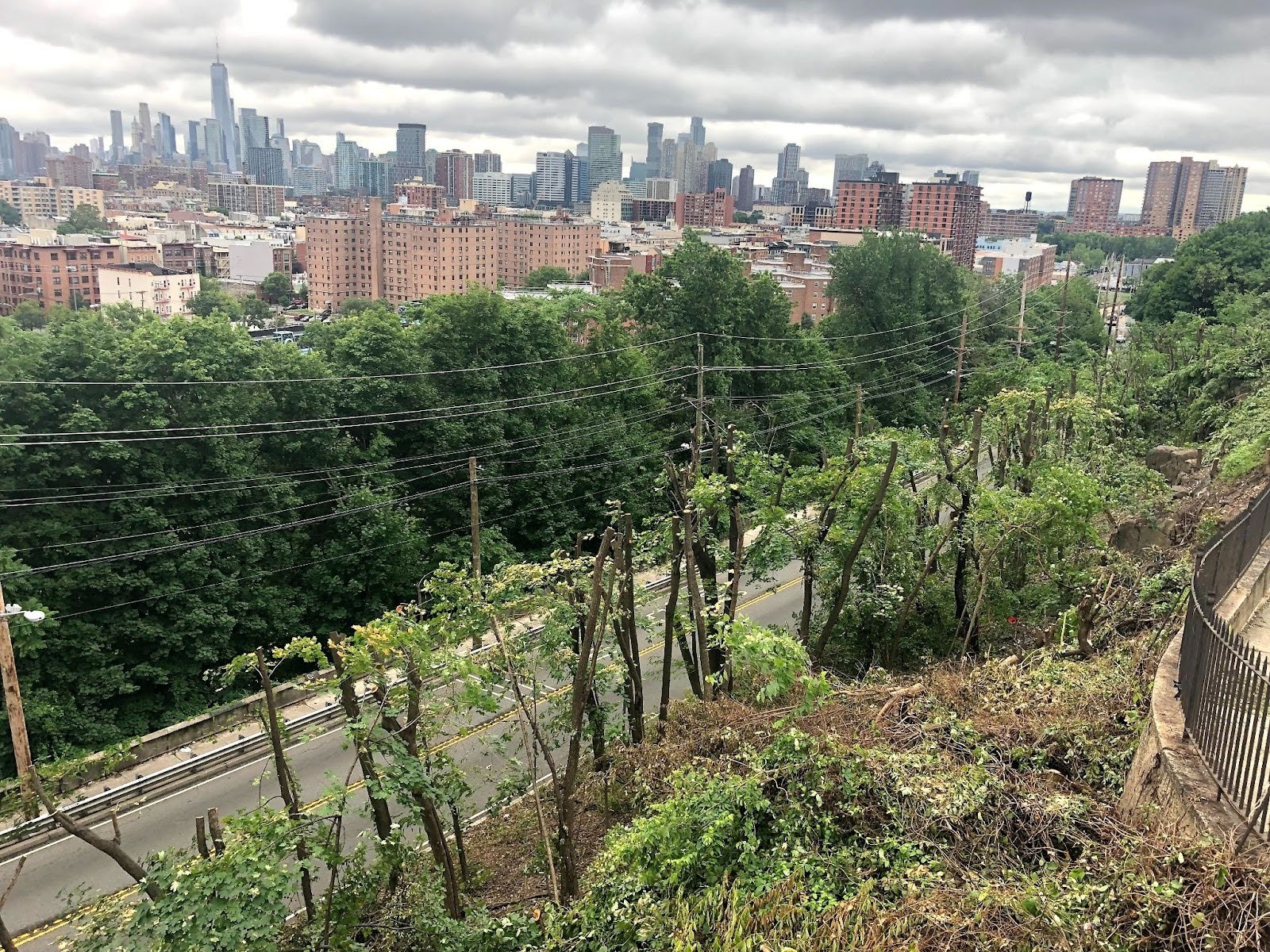
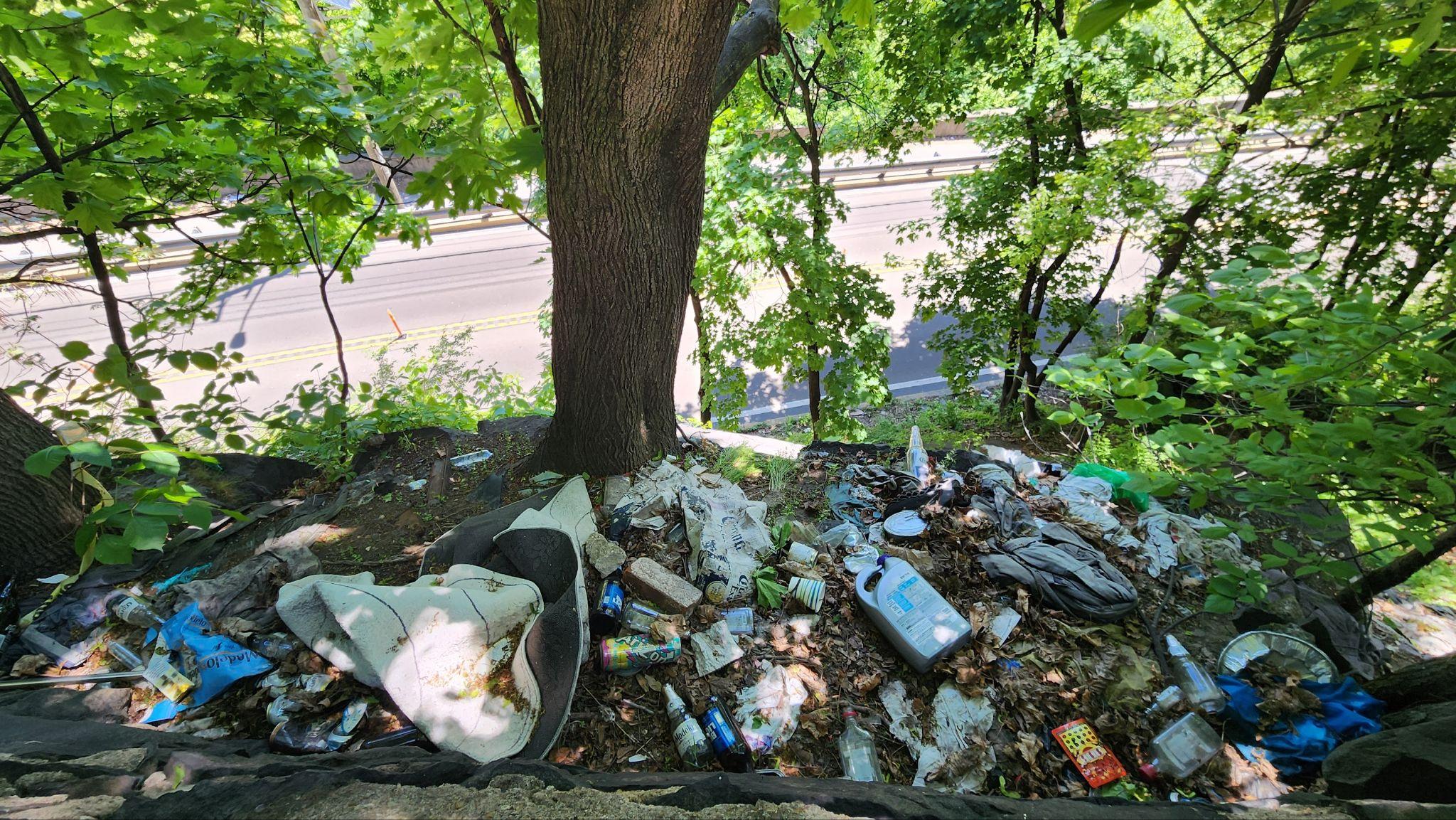
Begin with City-owned lots on the Palisades cliffs, specifically beneath Riverview Park, and establish a repeatable restoration model.
Create a master environmental-management plan based on urban habitat-restoration practices, then secure funding for invasive plants and trash removal.
Connect current ordinances and planning efforts to ecological goals so protection includes the cliff ecosystem as well as skyline views.
Public agencies, restoration networks, and community organizations already contribute relevant expertise.
Join the mailing list for project updates and opportunities to participate.